Ennoia-Reflexion: Hermeneutic or Interpretation

English

To interpret is to give a meaning.

All knowledge is interpretation.

According to Nietzsche there is no fact only interpretation.

Commentary 1

Everything around us is obscure, the whole world is obscurity. To understand it, it is necessary to interpret it.

Commentary 2

There are two possible interpretations of the world. One external or exoteric interpretation, e.g. Science or the meaning given to daily, practical life. A second esoteric interpretation (inner knowledge) e.g. Art. Aesthetic must be absorbed into Hermeneutic,  ‘Die Asthetik muss in der Hermeneutik aufgehen’, H.-G. Gadamer. Art provides access to Beauty, the Spiritual, the Non-being.

Commentary 3

Nothing has meaning per se.

Research into absolute knowledge has no objective meaning. The researcher gives meaning to the object of research and not the reverse.

Commentary 4

Only myth can fundamentally give meaning to the desire to understand the world and everything around us.

Commentary 5

The most famous myth is Plato’s Cave: the wretched people chained up in the cave only see shadows, true reality escapes them as it is outside the cave.

Commentary 6

Myth gives meaning but never attains reality en soi. Myth is always interpretation. It gives an explanation, subjective and satisfying knowledge without ever attaining any objectivity.

© Copyright 2021 Synesios

Français

Ennoia – Réflexion

Herméneutique ou Interprétation

Interpréter : donner un sens.

Toute connaissance est interprétation.

Selon Nietzsche il n’y a pas de fait, il n’y a que des interprétations.

Commentaire 1

Tout ce qui nous entoure est obscur, le monde entier est obscurité. Pour le comprendre il faut l’interpréter.

Commentaire 2

Deux interprétations du monde sont possibles. Une interprétation de l’extérieur ou exotérique p ex la science ou le sens donné à la pratique de la vie de tous les jours. Une seconde interprétation ésotérique (connaissance de l’intérieur) p ex l’Art. L’Esthétique doit s’ouvrir dans l’Herméneutique ‘Die Asthetik muss in der Hermeneutik aufgehen’, H.-G. Gadamer. L’Art donne accès au Beau, au Spirituel, au Non-être.

Commentaire 3                                                      

Rien n’a de sens en soi. L’objet d’une recherche en vue d’une connaissance en soi n’a aucun sens objectif. C’est le chercheur qui donne le sens à l’objet de sa recherche et non l’inverse.

Commentaire 4

Vouloir comprendre le monde et tout ce qui nous entoure, seul le mythe est fondamentalement ce qui donne sens.

 Commentaire 5

Le mythe le plus célèbre est celui de la Caverne de Platon : les malheureux enchainés dans la caverne ne voient que des ombres, la vraie réalité leur échappe, elle se trouve en dehors de la caverne.

Commentaire 6

Le mythe donne sens mais n’atteint jamais la réalité en soi. Il est toujours interprétation. Il donne une explication, une connaissance subjective satisfaisante sans jamais atteindre aucune objectivité.

© Copyright 2021 Synesios

Ennoia-Reflexion: The One and the Multiple

English

Monism and Dualism

Commentary 1

The One in a qualitative and transcendental sense signifies unity of the Whole as opposed to Multiple, quantitative without unity.

Commentary 2

The One has been of considerable importance since the dawn of western philosophy. Heraclitus : ϰαὶ ἐϰ πάντων ἓν ϰαὶ ἐξ ἑνὀς πάντα. ‘The One is composed of all things and all things come from the One’.

For Plato it is the absolute transcendence of the One above the Multiple.

Commentary 3

Γεννητικὴ γὰρ ἡ τοῦ ἑνὸς  φύσις οὖσα τῶν πάντων οὐδέν ἐστιν αὐτῶν, Plotinus. ‘Indeed the nature of the One is generative of everything, but nothing of what it engenders’ (the Multiple).

Commentary 4

The One is the totality of the Multiple.

The Multiple is the illusion of the One.

vidyāṁ cāvidyāṁ ca yas tad vedobhayam saha

avidyayā mṛtyuṁ tīrtvā vidyayāmṛtam aśnute. Īśa Upaniṣad

‘Knowledge and Ignorance, he who knows That (Tad) as the two together, in ignorance overcomes death, in knowledge attains immortality.

avidya  = ignorance of the One, conscious of Multiplicity

vidyā = knowledge of the One, conscious of unity.

Commentary 5

Tàoshēng yī. Yīshēng èr. Èr shēng sān. Sān shēng wànwù, TAO TEH KING ‘Tao engenders one, one engenders two, two engenders three, three engenders all things’

Tao is the transcendental One, it gives birth to the three quantitatives one, two, three.

Three in turn gives birth to the multiple, to all that exists.

Commentary 6

Monism and Dualism

Definition: Monism: all that exists under the appearance of multiplicity is one fundamental reality. Dualism: a doctrine admitting two first irreducible principles.

Commentary 7

Dualism rarely does not lead to an ethical dual division –  two substantial cosmic principles: Light and Darkness, Good and Evil.

© Copyright 2021 Synesios

Francais

Ennoia Ré-flexion: L’Un et le Multiple

Monisme et Dualisme

Commentaire 1

L’Un au sens qualitatif et transcendent signifie l’unité du Tout et s’oppose à Multiple, quantitatif et sans unité.

Commentaire 2

L’Un a joué un rôle considérable dès les débuts de la philosophie occidentale. Héraclite : ϰαὶ ἐϰ πάντων ἓν ϰαὶ ἐξ ἑνὀς πάντα. L’Un est composé de toute chose et toute chose sort de l’Un.

Pour Platon, transcendance absolue de l’Un sur le Multiple. 

Commentaire 3

Γεννητικὴ γὰρ ἡ τοῦ ἑνὸς  φύσις οὖσα τῶν πάντων οὐδέν ἐστιν αὐτῶν, Plotin ‘En effet la nature de l’Un est génératrice de tout, elle n’est rien de ce qu’elle engendre’ (le Multiple).

Commentaire 4

L’Un totalité du Multiple.

Le Multiple illusion de l’Un.

vidyāṁ cāvidyāṁ ca yas tad vedobhayam saha

avidyayā mṛtyuṁ tīrtvā vidyayāmṛtam aśnute. Īśa Upaniṣad

‘Connaissance et Ignorance, celui qui connaît Cela (Tad) comme les deux ensembles, par ignorance il franchit la mort, par connaissance il atteint immortalité’.

avidya  = ignorance de l’Un, conscience de la multiplicité

vidyā = connaissance de l’Un, conscience de l’unité 

Commentaire 5

Tàoshēng yī. Yīshēng èr. Èr shēng sān. Sān shēng wànwù, TAO TEH KING ‘Le Tao engendre un, un engendre deux, deux engendre trois, trois engendre toute chose.’

Le Tao est l’Un transcendantal, il donne naissance aux trois quantitatifs un, deux, trois.

Trois à son tour donne naissance au multiple, à tout ce qui existe.

Commentaire 6

Monisme et Dualisme.

Définition : Monisme tout ce qui existe sous les apparences de la multiplicité est une seule réalité fondamentale. Dualisme : doctrine admetant deux principes premiers irréductibles.

Commentaire 7

Il est rare que le Dualisme ne conduise pas à une division duelle éthique, c’est-à-dire deux principes cosmiques substantiels : Lumière et Ténèbres, Bien et Mal.

© Copyright 2021 Synesios

Ennoia-Reflexion: Symbols

English

Symbols

In ancient Greece σύμβολον, the symbol was a sign of recognition formed by two pieces of an object shared by two persons. The symbol is half of a whole which is ontologically the same.

Commentary 1

The One is the fundamental Being of all things material and immaterial.

The symbol represents a correspondence between the represented and the representative.

The symbol is ontologically of the same nature, of the same substance as the represented object.

Commentary 2

We can consider the symbol as a simple sign of recognition or the rapprochement of two entities which are ontologically the same.

Commentary 3

We should avoid interpreting the Presocratics too naively.

Material water is the symbol of Water, the principle of all things ὕδωρ… ἐστὶν ἀρχὴ πάντων, Thalès.

For Heracles, fire κόσμον τόνδε, τὸν αὐτὸν ἁπάντων, οὔτε τις θεῶν οὔτε ἀνθρώπων ἐποίησεν, ἀλλʹἦν ἀεὶ καὶ ἔστιν καὶ ἔσται πῦρ ἀείζωο, is the symbol of eternal, ever living Fire: this world, the same for everyone, made by none of the gods nor by man but has always been and it is and will be [the] ever living Fire.

Commentary 4

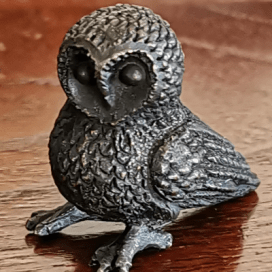
The owl is the symbol of wisdom.

What is the correspondence between the represented wisdom and the representative owl?

The owl sees its prey in darkness, the sage finds truth in the obscurity of the world.

Commentary 5

The dove is the symbol of peace. The represented is peace and the dove the representative. The correspondence is the colour white.

The dove is white, it is the companion of the goddesses of love:  Ishtar, Atargatis, Aphrodite, and in Rome Venus Columba. Peace is white, the opposite war is black and death. 

© Copyright 2021 Synesios

……………………………………………………………………………………………

Ennoia-Réflexion

Français

Le Symbole

Dans l’Antiquité grecque σύμβολον, le symbole était un signe de reconnaissance formé de deux morceaux d’un objet partagé entre deux personnes. Le symbole est la moitié d’un tout ontologiquement le même.

Commentaire 1

L’Un est l’Etre fondamental de toutes choses matérielles et immatérielles.

Le symbole re-présente, rend présent une correspondance entre le représenté et le représentant.

Le symbole est ontologiquement de même nature, de même substance que la chose représentée. 

Commentaire 2

On peut considérer le symbole comme une simple signe de reconnaissance ou le rapprochement de deux entités ontologiquement semblables.

Commentaire 3                                                      

Il faut éviter d’interpréter les Présocratiques d’une manière trop naïve.

L’eau matériel est le symbole de l’Eau principe de toutes choses ὕδωρ… ἐστὶν ἀρχὴ πάντων, Thalès.

Le feu, κόσμον τόνδε, τὸν αὐτὸν ἁπάντων, οὔτε τις θεῶν οὔτε ἀνθρώπων ἐποίησεν, ἀλλʹἦν ἀεὶ καὶ ἔστιν καὶ ἔσται πῦρ ἀείζωο chez Héraclite est le symbole du Feu éternel toujours vivant.

Ce monde, le même pour tous, ni aucun des dieux, ni aucun des hommes ne l’a fait, mais il a toujours été et il est et sera [Le] Feu toujours vivant.

Commentaire 4

Un Hibou, une Chouette sont le symbole de la sagesse.

Quelle est la correspondance entre le représenté la sagesse et le représentant la Chouette.

La chouette voit sa proie dans l’obscurité, le sage trouve la vérité dans l’obscurité du monde. 

 Commentaire 5

La colombe est le symbole de la paix. Le représenté est la paix et la colombe le représentant.

La correspondance est la couleur blanche.

La colombe est blanche, elle est la compagne des déesses de l’amour:  Ishtar, Atargatis, Aphrodite, et à Rome Venus Columba. La paix est blanche contrairement à la guerre qui est noire et mort. 

© Copyright 2021 Synesios

Ennoia-Reflexion: Philosophy

English

What is the foundation of philosophy.

In every civilisation, in all societies the same fundamental questions have been asked (e.g. life and death, matter and spirit, the one and the multiple).

The foundation of philosophy is existential: ‘To be or not to be’.

Commentary 1

In ancient Greek times σοφία is the oldest name in philosophy according to Renouvier.  Sophia is knowledge of all things. The Wise-Man is he who knows, who knows the principles of all the sciences.

Commentary 2

Philosophy right from the start has sought the ἀρχή, the first founding principle, the origin of all things. China found it in Tao, Hinduism in ātman. In the West, Heraclitus in the fire πῦρ of which the material fire is only one symbol (in the etymological sense) of the always living fire which is the world.

Commentary 3

Over the centuries the concept of philosophy has developed to such an extent that it is difficult to hold onto the philo-sophia etymological definition, the philosopher is the one who loves wisdom.

Commentary 4

Philosophy is not a world vision, ‘Weltanschauung’ (see Heidegger, ‘Zur Bestimmung der Philosophie’).

If you combine every thought of any individual, the synthesis allows us to have an idea of his world vision but not of his philosophy.

Commentary 5

Fundamental philosophy does not ask questions as the response is already in the question. The question is limiting, highlighting a particular point and leaving everything else in shadow.

Commentary 6

If philosophy has a sense, it is mythical. But then what is the sense of philosophy. The sense of philosophy is the search of the ἀῥχή, the foundation of absolutely everything both human and divine (see Cicero).

Commentary 7

Philosophy is above all science (ἐπιστήμη) according to Aristotle whereas above all wisdom according to Confucius.

Commentary 8

Philosophy is science and wisdom. The link uniting the two notions is Knowledge and its opposite Ignorance. Put the two together, through ignorance you cross over death and through knowledge you attain immortality, vidyāṁ cāvidyām … avidyayā mṛtuṁ tīrtvā vidyayāmṛtam aśnute ‘Īsha Upaniṣad’.

© Copyright 2021 Synesios

Ennoia-Réflexion 

Philosophie

Français

Quel est le fondement de la philosophie.

Dans toutes les civilisations, dans toutes les sociétés on s’est posé les mêmes questions fondamentales (par ex. vie et mort, matière et esprit, l’un et le multiple).

Le fondement de la philosophie est existentiel : ‘To be or not to be’.

Commentaire 1

Dans l’Antiquité σοφία est le plus ancien nom de la philosophie selon Renouvier. Sophia est connaissance de toutes choses. Le Sage est celui qui sait, qui connait les principes de toutes les sciences.

Commentaire 2

La philosophie dès ses débuts a recherché l’ ἀρχή , le principe premier fondateur à l’origine de toutes choses. La Chine l’a trouvé dans le Tao, l’Hindouisme dans l’ātman. En occident, Héraclite dans le feu πῦρ dont le feu matériel n’est qu’un symbole (au sens étymologique) du feu toujours vivant qui est le monde.

Commentaire 3

Au cours des siècles le concept de philosophie s’est tellement développé qu’il est difficile de s’en tenir à la définition étymologique philo-sophia, le philosophe est celui qui aime la sagesse.

Commentaire 4

La philosophie n’est pas une vision du monde, ‘Weltanschauung’ (v. Heidegger, ‘Zur Bestimmung der Philosophie’).

Si l’on réunit toutes les pensées d’un individu quelconque, la synthèse peut permettre de se faire une idée de sa vision du monde mais pas de sa philosophie.

Commentaire 5

La philosophie fondamentale ne pose pas de questions, car la réponse est toujours déjà contenue dans la question. La question est limitative, elle met en lumière un point particulier et laisse dans l’ombre tout le reste.

Commentaire 6

Si la philosophie a un sens, elle est alors mythique. Mais quel est donc les sens de la philosophie.

Le sens de la philosophie est la recherche de l’ἀῥχή, du fondement d’absolument tout et de toutes choses à la fois humaines et divines cf Cicéron.

Commentaire 7

La philosophie est avant tout science (ἐπιστήμη) selon Aristote alors quelle est avant tout sagesse selon Confucius.

Commentaire 8

La philosophie est science et sagesse. Le lien qui unit les deux notions est Connaissance et son contraire Ignorance. Si on unit les deux notions : Par ignorance on franchit la mort, par connaissance on atteint l’immortalité, vidyāṁ cāvidyām … avidyayā mṛtuṁ tīrtvā vidyayāmṛtam aśnute ‘Īsha Upaniṣad’.

© Copyright 2021 Synesios

Ennoia-Reflexion: Lógos, sacralisation of the word

English

In many religions and philosophies, the word (Lógos) has been made sacred in both the west and the east.   

To say, is to give birth: Fiat.

Commentary 1

Lógos (the word) is the fundamental mediation of the material being with the spiritual being.

Commentary 2

‘ἐν ἀρχῇ ἦν ὁ λόγος, καὶ ὁ λόγος ἦν πρὸς τὸν θεόν, καὶ θεὸς ἦν ὁ λόγος’Saint John: In the beginning was Lógos and Lógos was with God and Lógos was God.

Commentary 3

‘Dixitque Deus : Fiat lux et facta est lux’, Geneses. And God said, ‘Let there be light and light was… ‘.

Commentary 4

For Heraclites Lógos is the mediation between human thought and cosmic reality.

For Plato Lógos is the divine as the source of the Ideas.

For the Stoïciens Lógos is common to the world and man – the supreme divinity.

Commentary 5

Allah : ‘When He decides, He just gives the command ‘Be’ and it becomes’, Koran.

Commentary 6

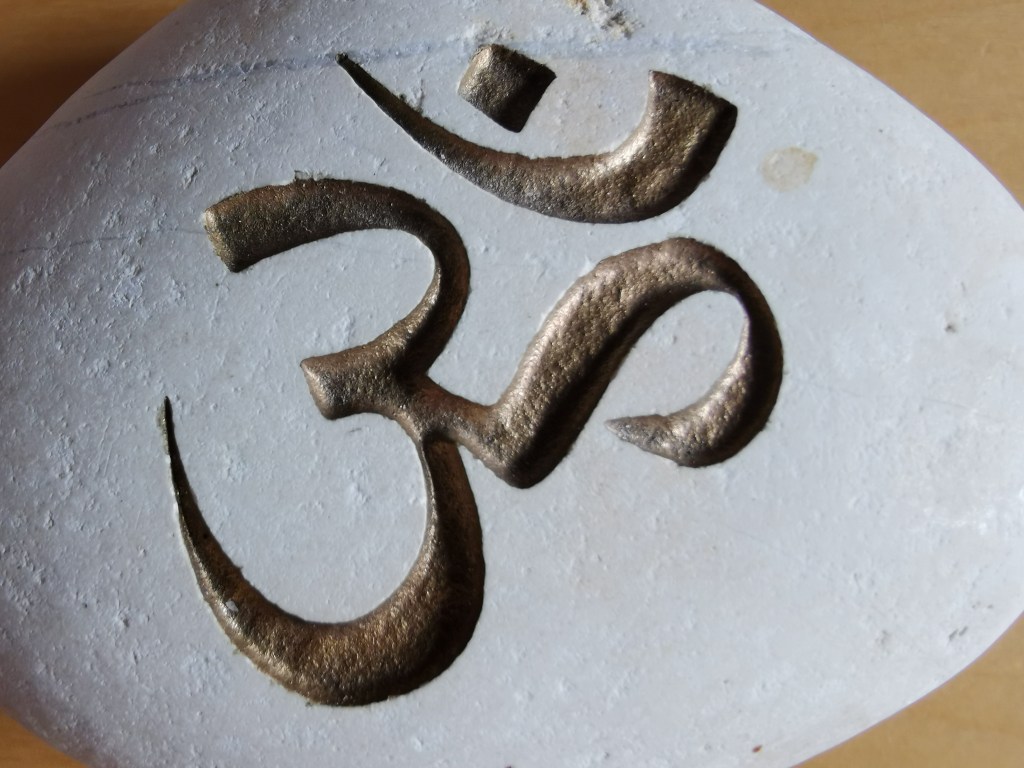
OṂ ity etad akṣaram idaṁ sarvam … bhūtam bhavad bhaviṣyad iti sarvam auṁkāra eva, yac cānyat trikālātītaṁ tad apy auṁkāra eva, Māṇḍūkya Upaniṣad. OṂ: this syllable is all this (the whole world) … the past, the present and the future … all that is only the syllable OṂ and anything beyond these three times that also is simply the syllable OṂ.

Commentary 7

‘eṣa sarveśvaraḥ, eṣa sarvajñaḥ, eṣo’ntāryami, eṣa yoniḥ sarvasya prabhavāpyayau hi bhūtānām’, Māṇḍūkya Upaniṣad. This is (prājña, an aspect of OṂ) the lord of all, he knows everything, he controls everything, he is the womb of all, he is the beginning and the end of (all) beings.

To utter the sacred syllable OṂ is to enter into contact with the Divine.

© Copyright 2021 Synesios

OṂ

Français

Ennoia-Ré-flexion : Lógos, la sacralisation de la parole

Dans beaucoup de religions et de philosophies la parole (Lógos) a été sacralisée aussi bien en occident qu’en orient.

Dire, c’est donner naissance : Fiat.

Commentaire 1

Le Lógos (parole) est la médiation fondamentale de l’être matériel avec l’être spirituel.

Commentaire 2

‘ἐν ἀρχῇ ἦν ὁ λόγος, καὶ ὁ λόγος ἦν πρὸς τὸν θεόν, καὶ θεὸς ἦν ὁ λόγος’, Saint-Jean. Au commencement était le Lógos et le Lógos était avec Dieu et le Lógos était Dieu.

Commentaire 3

‘Dixitque Deus : Fiat lux et facta est lux’, Genèse. Et Dieu dit : que la lumière soit et la lumière fut.

Commentaire 4

Chez Héraclite le Lógos est la correspondance de la pensée humaine avec la réalité cosmique.

Chez Platon le Lógos est le divin en tant que source des Idées.

Chez les Stoïciens le Lógos est commun au monde et à l’homme, il est la Divinité suprême.

Commentaire 5

Allâh … ‘Quand il décide une chose, il lui suffit de dire : soit et cela est’, Coran.

Commentaire 6

OṂ ity etad akṣaram idaṁ sarvam … bhūtam bhavad bhaviṣyad iti sarvam auṁkāra eva, yac cānyat trikālātītaṁ tad apy auṁkāra eva, Māṇḍūkya Upaniṣad. OṂ, cette syllabe est tout cela (le monde entier) … le passé, le présent et le future … tout cela est seulement ‘la syllabe’ OṂ et n’importe quoi au-delà des trois (temps) cela aussi est seulement la syllabe OṂ.

Commentaire 7

‘eṣa sarveśvaraḥ, eṣa sarvajñaḥ, eṣo’ntāryami, eṣa yoniḥ sarvasya prabhavāpyayau hi bhūtānām’, Māṇḍūkya Upaniṣad. Celui-ci (prājña, un des deux aspects de OṂ)est le seigneur de tout, il connaît tout, il contrôle tout, il est la matrice de tout, il est le commencement et la fin de (tous) les êtres.

Prononcer la syllabe sacrée OṂ c’est entrer en contact avec le Divin.

© Copyright 2021 Synesios

Ennoia-Reflexion: After-death

English

After-death

Reflexion on after-death has given rise to numerous interpretations.

The two principal ones are reincarnation and resurrection.

Commentary 1

Reincarnation can be defined as incarnation in a new body after death: to exist again in a new material, corporal form.

Commentary 2

All religions, all philosophies give not only different definitions but also different names – Metempsycosis: transmigration of the soul in a new body. Palingenesis: new birth, reborn. Μετοίχησιϛ Plato : migration of the soul, and many other names.

Commentary 3

All religions, all philosophies have different visions of reincarnation.

For some, the human soul can only be reborn in a new human body; for others any living being can be reborn in a human body, but also in an animal body, even in a plant.

Commentary 4

In the West among the ancient philosophers the Pre-Socratics Pythagoras and Empedocles adhered to the idea of reincarnation.  

‘ᾔδη γάρ ποτ’ ἐγὼ γενόμην κοῦρός τε κόρη τε

θάμνος τ’ οἰωνός τε καὶ ἔξαλος ἔλλοπος ἰχθύς’. Empedocles

‘For some other time I have been a young boy, a young girl, a bush, a bird and a voiceless fish out of the sea.

Commentary 5

We also recall Pythagoras’ anecdote about intervening when a dog was being beaten, saying he recognised in the animal’s howls the voice of a dead friend.

Commentary 6

Reincarnation is found in India in Buddhism and Hinduism.

E. de Henseler, ‘… points out that passages about transmigration are frequent in the Upanishads’, see Dr. Ed. Bertholet in La Reincarnation (1949).

Commentary 7

Sa hovāca, ye vai ke cāsmāl lokāt prayanti … prajanayati sa iha kīṭo vā, pataṅgo vā, matsyo vā, śakunir vā, siṁho vā, varāho vā, paraśvān vā, śārdūlo vā, puruṣo vā,anyo vā teṣu teṣu sthāneṣu pratyājāyate, yathā-karma yathā-vidyam … Kauṣītaki-Brāhmaṇa Upaniṣad.

‘In truth those who leave this world … are reborn as a worm, or an insect, or a fish, or a bird, or a lion, or a wild boar, or a snake, or a tiger, or a man, or as another person reborn again in accordance with his deeds, according to his beliefs’.

Commentary 8

Society has no say about a person’s after-death.

Some say the dead person will be resuscitated, others that he will be reincarnated, and others that he will disappear for ever.

No question of paradise, nor hell nor a long and painful series of reincarnations (Saṃsāra). If there is karma, this karma (Karman-action) is neutral as shown in its etymology ‘kṛ’ meaning to do – no question of good nor evil.

Commentary 9

Where does the innate need in a human being to judge and punish come from? This need runs so deep that it goes beyond the death of an individual. After his death he will be judged, punished or recompensed.

We project hic et nunc society into the hereafter.

Commentary 10

The need to judge and to punish is found throughout all societies. Even after death Resurrection or Reincarnation are tightly linked to Ethics, good and evil.

Commentaire 11

τίς δ’ οἶδεν εἰ τὸ ζῇν μέν ἐστι κατθανεῖν,

τὸ κατθανεῖν δὲ ζῆν. Euripides, quoted by Plato.

‘Who knows if living is not dying,

   and dying is not living.’

Commentary 12

In fundamental philosophy death does not exist. It is another form of existence, another way of being and life another way of death. The foundation of death is life and the foundation of life is death. Life and death are one, two different aspects of the One.

© Copyright 2021 Synesios

Français

Ennoia Réflexion 

L’Après-mort

La réflexion sur l’après-mort a donné lieu à de très nombreuses interprétations.

Les deux principales sont la réincarnation et la résurrection.

Commentaire 1

La réincarnation peut se définir comme une incarnation dans un nouveau corps après la mort : exister de nouveau dans une nouvelle forme corporelle matérielle.

Commentaire 2

Chaque religion, chaque philosophie a donné non seulement une définition différente mais encore un nom différent – Métempsycose : transmigration de l’âme dans un nouveau corps. Palingénésie : naissance de nouveau, renaissance. Μετοίχησιϛ Platon : migration de l’âme, et encore bien d’autres noms.

Commentaire 3

Chaque religion, chaque philosophie a une vision différente de la réincarnation.

Pour les uns l’âme humaine ne peut renaitre que dans un nouveau corps humain, pour les autres toute être vivant peut renaître dans un corps humain, mais aussi dans un corps animal, voire végétal.

Commentaire 4

En Occident parmi les plus anciens philosophes, les Présocratiques Pythagore et Empédocle avaient déjà adhéré à l’idée de réincarnation.

‘ᾔδη γάρ ποτ’ ἐγὼ γενόμην κοῦρός τε κόρη τε

θάμνος τ’ οἰωνός τε καὶ ἔξαλος ἔλλοπος ἰχθύς’. Empédocle.

‘Car j’ai été autrefois un jeune garçon, une jeune fille, un buisson, un oiseau et un poisson sans voix sorti de la mer’.

Commentaire 5

On se souvient de l’anecdote à propos de Pythagore intervenant au sujet d’un chien qui était battu, disant qu’il reconnaissait dans les cris de l’animal la voix d’un ami disparu.

Commentaire 6

L’idée de réincarnation se retrouve dans les Indes aussi bien dans le Bouddhisme et dans l’Hindouisme.

E. de Henseler, ‘fait remarquer que les passages traitant de la transmigration sont fréquents dans les Upanishads’ cité par le Dr. Ed Bertholet dans La Réincarnation (1949).

Commentaire 7

Sa hovāca, ye vai ke cāsmāl lokāt prayanti … prajanayati sa iha kīṭo vā, pataṅgo vā, matsyo vā, śakunir vā, siṁho vā, varāho vā, paraśvān vā, śārdūlo vā, puruṣo vā,anyo vā teṣu teṣu sthāneṣu pratyājāyate, yathā-karma yathā-vidyam … Kauṣītaki-Brāhmaṇa Upaniṣad.

‘Il dit : En vérité ceux qui quittent ce monde … renaissent soit un ver, ou un insecte, ou un poisson, ou un oiseau, ou un lion, ou un sanglier, ou un serpent, ou un tigre, ou un homme, soit une autre personne naissant de nouveau en accordance avec ses actions, selon ses connaissances.

Commentaire 8

La société n’a rien à dire sur l’après-mort d’une personne.

Celle-ci ressuscite selon les uns ou se réincarne selon les autres ou encore disparaît à tout jamais.

Point n’est besoin de paradis, ni d’enfer ou d’une longue et douloureuse série de réincarnations (Saṃsāra). S’il y a karma, ce karma (de Karman-action) est neutre comme l’indique son étymologie ‘kṛ’ faire, pas question de bien ni de mal.

Commentaire 9

D’où vient ce besoin inné chez l’être humain de juger et de punir. Ce besoin est si profond qu’il s’étend au-delà de la mort d’un individu. Après sa mort, il sera jugé, puni ou récompensé.

On projette la société hic et nunc dans l’au-delà.

Commentaire 10

Le besoin de juger et de punir se retrouve dans toutes les sociétés. Même après la mort Résurrection ou Réincarnation sont étroitement liées à l’Ethique, au bien et au mal.

Commentaire 11

τίς δ’ οἶδεν εἰ τὸ ζῇν μέν ἐστι κατθανεῖν,

τὸ κατθανεῖν δὲ ζῆν. Euripide, cité par Platon.

‘Qui sait si vivre n’est pas mourir,

  et mourir n’est pas vivre.’

Commentaire 12

En philosophie fondamentale la mort n’existe pas. Elle est une autre forme d’existence, une autre manière d’être et la vie une autre forme de mort. Le fondement de la mort est la vie et le fondement de la vie est la mort. Vie et mort sont un, deux aspects différents de l’Un.

© Copyright 2021 Synesios
Ennoia-Reflexion: The Soul

English

The concept of the soul can be found in nearly all societies: soul, anima, psyché, atman, shen, etc.

Commentary 1

All that is material and spiritual are at the same time sat and a-sat, being and non-being.

The soul is one aspect of A-sat, the Non-being.

Commentary 2

The soul is immaterial – the spiritual principle (ἀρχὴ), the origin of the foundation which is the raison d’être, the purpose that accounts for or justifies the existence of an object, an event a being.

According to Aristotle the soul is the original entelechy, the perfect fulfilment of a being.

… εἴη (ἡ ψυχή) ἂν ἐντελέχεια ἡ πρώτη    … this (the soul) is the fundamental entelechy.

Commentary 3

Material, matter, is infinitely divisible. The soul, the spiritual or non-being is found everywhere, divisible and indivisible at the same time.

Commentary 4

The soul of the world, Ἡ τοῦ παντὸς ψυχή.

Stoics believe that the individual soul is just a part of the universe’s soul. It is not a quantitative division but a qualitative one, the individual soul is the soul of the entire universe.

Commentary 5

ψυχὴ … θεῖον οῦσα ϰαὶ οἷον μοῖρα τοῦ ϰαλοῦ. Plotin. The soul … being divine is a part of Beauty.

We can always behold the soul of a being or thing because it is reflected in its beauty.

Commentary 6

‘Was die Continuität der anorganischen und der organischen Welt unterhält, und die ganze Natur zu einem allgemeinen Organismus verknüpft’. Ueber die Weltseele, Schelling.

‘What sustains the inorganic and organic continuity of the world, and unites all Nature is a Universal Organism’. About the soul of the world, Schelling.

© Copyright 2020 Synesios

Français

Ennoia-Réflexion L’âme

Le concept de l’âme se retrouve dans presque toutes les sociétés : âme, anima, psyché, atman, shen, etc.

Commentaire 1

Tout ce qui est matériel et tout ce qui est spirituel sont à la fois sat et a-sat, être et non-être.

L’âme est l’un des aspects d’A-sat, le Non-être.

Commentaire 2

L’âme est immatérielle, elle est le principe (ἀρχὴ) spirituel, ce qui est à l’origine, le fondement, ce qui donne la raison d’être, principe d’explication qui permet et justifie l’apparition, l’existence d’un objet, d’un événement, d’un être.

 Selon Aristote l’âme est l’entéléchie première, le parfait accomplissement de l’être.

… εἴη (ἡ ψυχή) ἂν ἐντελέχεια ἡ πρώτη    … celle-ci (l’âme) est l’entéléchie première.

Commentaire 3

Le matériel, la matière est divisible à l’infini. L’âme, le spirituel ou non-être se trouve partout, elle est à la fois divisible et indivisible.

Commentaire 4

L’âme du monde, Ἡ τοῦ παντὸς ψυχή.

Les Stoïciens pensent que l’âme individuelle n’est qu’une partie de l’âme de l’univers. Il ne s’agit pas d’une division quantitative, mais qualitative, l’âme individuelle est l’âme de l’univers tout entier.

Commentaire 5

ψυχὴ … θεῖον οῦσα ϰαὶ οἷον μοῖρα τοῦ ϰαλοῦ. Plotin.

L’âme … étant divine est comme une part de la Beauté.

On peut toujours contempler l’âme d’un être ou d’une chose, car elle se reflète dans sa beauté.

Commentaire 6

‘Was die Continuität der anorganischen und der organischen Welt unterhält, und die ganze Natur zu einem allgemeinen Organismus verknüpft’. Ueber die Weltseele. Schelling.

Ce qui soutient la continuité du monde inorganique et organique, et unit toute la Nature est un Organisme Universel, Sur l’âme du monde, Schelling.

© Copyright 2020 Synesios

Koan: Myth fundamentally gives meaning to everything.

English

All that is meaningful is mythical.

All that is not mythical has no meaning.

1          Commentary

What is the greatest myth in modern times? The most prestigious myth is Science.

What is in fact more remarkable and marvellous in modern Cosmology than the Big Bang.

It gives meaning to man’s need to understand his origins, the origin of the universe, the origin of everything, which is of course the material universe and not the spiritual universe.

2          Commentary

Another prestigious myth: Progress.

Progress does not exist: there are only changes and no progress as such. Progress is relative to a collective finality.

Rousseau said, ‘There is no real progress …  because everything we gain on the one side we lose on the other’.

3          Commentary

Restore and preserve health is the finality of traditional medicine.  Progress in medicine depends on the choice of a collectivity. 

To prefer health over illness is a choice dictated by our biological being.

In nature, neither health nor illness nor even death is preferable one to the other.

Progress in criminality is a negative progress and the aim a regression from point B to point A, towards less criminality.

4          Commentary

If you take two points A and B on an axis, and if from the middle of A and B you progress towards point A, you regress in the same proportion from point B, and vice versa.

This does not at all mean that point A is better or superior to point B.

There is never progression without regression but only progression-regression.

Points A and B are always equal, of equal value.

In the absolute it is all the same, it is a choice like any other.

It is the same for everything.

Of course, we can always prefer to go to the left or to the right.

Plato for ex. prefers an aristocratic government to a democratic one.  It is of course an aristocratic government uniquely composed of philosophers, wise men as per Confucius. An aristocratic government is in no way superior or inferior to a democratic one. It is a preference which prevails at a point in History. And vice versa a democratic government is in no way either superior or inferior to an aristocratic one.

A good government no matter which, depends entirely on the merit of the men and women who constitute it.

5          Commentary

Aristotle says that governments are cyclical: the government which follows democracy is tyranny. If the end of all current democracies is tyranny, it will not be the tyranny of just one man but the tyranny of Big Brother. This tyranny will be total – the most absolute and will lead to the end of any civilisation known so far.

6          Commentary

Kant and later Heidegger wanted philosophy to be a science, but modern science is a set of pluri-subjective knowledge, validated by most experts, and not Cicero’s ‘scientia’ which is simply knowledge of divine and human things.

There is never progress in philosophy. 

© Copyright 2020 Synesios

Français

Koan: Le mythe est fondamentalement ce qui donne sens.

Tout ce qui a un sens est mythique.

Tout ce qui n’est pas mythique n’a pas de sens.

 1         Commentaire

Quel est le plus grand mythe des temps modernes ? Le mythe le plus prestigieux est la Science.

Qu’y-a-t-il en effet de plus remarquable, de plus merveilleux en Cosmologie moderne que le Big Bang.

Il donne sens au besoin de l’homme de connaître ses origines, l’origine de l’univers, l’origine de toute chose.

Il s’agit certes de l’univers matériel et non pas de l’univers spirituel.

 2         Commentaire

Autre mythe prestigieux : le Progrès.

Le progrès n’existe pas. Il n’y a que des changements et jamais de progrès en soi.

Le progrès est toujours relatif à une finalité collective.

Selon Rousseau, ‘Il n’y a pas de vrai progrès …  parce que tout ce qu’on gagne d’un côté, on le perd de l’autre’. 

3          Commentaire

Restaurer et préserver la santé par ex. est la finalité de la médecine traditionnelle. Le progrès en médecine est le choix fondamental d’une collectivité. Préférer la santé à la maladie est un choix dicté par notre être biologique.

Dans la nature, la santé ou la maladie voire la mort, ni l’une n’est préférable à l’autre.

Le progrès de la criminalité est un progrès négatif et le but une régression du point B ou point A, vers moins de criminalité.

4          Commentaire

De deux points A et B sur un axe, si à partir du milieu A et B, on progresse par ex. vers le point B on régresse d’autant vis-à-vis du point A et vice versa.

Cela ne signifie nullement que le point B soit meilleur ou supérieur au point A.

Il n’y a jamais de progrès, de progression sans régression, mais seulement une progression-régression.

Les points A et B sont toujours à égalité, à valeur égale.

Dans l’absolu cela revient au même, il s’agit d’un choix comme un autre.

Il en va de même pour toute chose.

On peut naturellement toujours préférer aller plutôt à gauche ou plutôt à droite.

Platon par ex. préfère un gouvernement aristocratique à la démocratie. Il s’agit naturellement d’un gouvernement aristocratique, uniquement composé de philosophes, de sages comme le veut aussi Confucius. Un gouvernement aristocratique n’est en aucun cas ni supérieur ni inférieur à un gouvernement démocratique. Vice versa un gouvernement démocratique n’est en aucun cas ni supérieur ni inférieur à un gouvernement aristocratique.   

C’est une préférence qui peut s’imposer à un moment donné de l’Histoire.

Un bon gouvernement quel qu’il soit dépend entièrement de la valeur des hommes et des femmes qui le composent.

5          Commentaire

Aristote pense que les différents gouvernements sont cycliques. Le gouvernement qui suit la démocratie est la tyrannie.

Si la fin des démocraties modernes va être la tyrannie, elle ne sera pas la tyrannie d’un seul homme, mais la tyrannie de Big Brother. Elle sera la tyrannie la plus totale, la plus absolue qui conduira à la mort de toute civilisation connue jusqu’ici.

6          Commentaire

Kant et plus tard Heidegger ont toujours pensé de faire de la philosophie une science, mais la science moderne est un ensemble de connaissances pluri-subjectives agréées par un plus grand nombre, et non pas la ‘scientia’ de Cicéron qui est simplement connaissance des choses divines et humaines.

Il n’y a jamais de progrès en philosophie.

© Copyright 2020 Synesios

Ennoia-Reflexion: Religion

English

Faith has nothing to do with the essence of religion.

Commentary 1

The impact of transcendental imagination with the Divine gives rise to all religious forms and creates gods and goddesses.

Commentary 2

The Divine is everywhere and in everything.

Through deep meditation we can reach the essence of a thing, of a being and find the divine.

Commentary 3

If as thinks Nietzsche the raison d’être of the world is Beauty, then the perception of beauty in everything and everywhere enables contemplation of the Divine.

Commentary 4

Religion is too often linked to Morality.

When religion takes the form for example of gods and goddesses their will takes over everything everywhere and creates good and evil.

The divine has nothing to do with human ethics – too human.

Commentary 5

Mixing religion and ethics creates conflict between laity and religious.

Commentary 6

To attain Spiritual Plenitude in this life is the foundation of Religion.

© Copyright 2020 Synesios

Français

Ennoia-Réflexion

Religion

La foi n’a rien à faire avec l’essence de la religion.

Commentaire 1

L’impact de l’imagination transcendantale avec le Divin engendre toutes les formes du religieux, crée des dieux et des déesses.

Commentaire 2

Le Divin est partout et en toute chose.

Par une profonde méditation on peut parvenir à l’essence d’une chose, d’un étant et trouver le divin.

Commentaire 3

Si comme le pense Nietzsche, la raison d’être du monde est le Beau, alors la perception de la beauté en toute chose et partout permet de contempler le Divin.

Commentaire 4

La religion est trop souvent liée à la Morale.

Quand la religion prend la forme par exemple de dieux et de déesses leur volonté l’emporte surtout et partout, elle engendre alors le bien et le mal.

Le divin n’a rien à faire avec l’éthique humaine, trop humaine.

Commentaire 5

L’amalgame de la religion et de l’éthique crée la division entre le laïque et le religieux.

Commentaire 6

Atteindre dans cette vie la Plénitude Spirituelle, tel est le fondement de la Religion.

© Copyright 2020 Synesios

Ennoia-Reflexion: The Meaning of Life

English

To ask if life has meaning is to ask if the Universe has meaning, as we are all an integral part of the universe.

Commentary 1

We are at the same time a particle of the material universe but also a particle of the spiritual Non-being.

Commentary 2

If Being and Non-being are eternal, timeless, we are equally eternal and timeless.

Commentary 3

But then what is life? What meaning to give it.

Why do we exist only for some decades when stars and galaxies exist for billions of years.

Commentary 4

What is the point of life? The only true life is eternal, but death is part of it.

Life and death are by nature similar, death is another form of being.

Commentary 5

Life can only have a sense if it is perpetuated by eternal death.

Commentary 6

What is the raison d’être of the Universe and our existence.

The Universe exists by means of Kâma, Love or the Non-being’s desire of Being. Love of Beauty – we come back to Nietzsche: ‘Als ästhetisches Phänomen ist das Dasein und die Welt ewig gerechtfertigt’, Die Geburt der Tragödie.  Existence and the world are only eternally justified if they are an aesthetic phenomenon.

Commentary 7

According to Sri Aurobindo the purpose of life is to attain spiritual Plenitude by yourself in this life.

© Copyright 2020 Synesios

Français

Ennoia – Réflexion

Le sens de la vie

Se demander si la vie a un sens, c’est se demander si l’Univers a un sens, car nous tous sommes une partie intégrante de l’univers.

Commentaire 1

Nous sommes à la fois une parcelle de l’Univers matériel mais aussi une parcelle du Non-être spirituel.

Commentaire 2

Si Etre et Non-être sont éternels hors du temps, nous sommes également éternels et hors du temps.

Commentaire 3

Mais alors qu’est-ce que la vie ? Quel sens lui donner.

Pourquoi existons-nous quelques dizaines d’années face au milliard d’années des étoiles et des galaxies.

Commentaire 4

A quoi bon la vie ? La seule vraie vie est éternelle, mais la mort en fait partie.

Vie et mort sont de nature semblables, la mort étant une autre manière d’être.

Commentaire 5

La vie ne peut avoir un sens que si elle se prolonge par la mort éternelle.

Commentaire 6

Quelle est la raison d’être de l’Univers, de notre existence.

L’Univers existe grâce à Kâma, l’Amour ou désir d’Etre du Non-être. Amour du Beau, on en revient à Nietzsche, ‘Als ästhetisches Phänomen ist das Dasein und die Welt ewig gerechtfertigt’, Die Geburt der Tragödie.  L’existence et le monde ne sont éternellement justifiés que dans la mesure où ils sont un phénomène esthétique.

Commentaire 7

Selon Sri Aurobindo le but de la vie : atteindre de soi-même dans cette vie la Plénitude spirituelle.

© Copyright 2020 Synesios