
English
In many religions and philosophies, the word (Lógos) has been made sacred in both the west and the east.
To say, is to give birth: Fiat.
Commentary 1
Lógos (the word) is the fundamental mediation of the material being with the spiritual being.
Commentary 2
‘ἐν ἀρχῇ ἦν ὁ λόγος, καὶ ὁ λόγος ἦν πρὸς τὸν θεόν, καὶ θεὸς ἦν ὁ λόγος’Saint John: In the beginning was Lógos and Lógos was with God and Lógos was God.
Commentary 3
‘Dixitque Deus : Fiat lux et facta est lux’, Geneses. And God said, ‘Let there be light and light was… ‘.
Commentary 4
For Heraclites Lógos is the mediation between human thought and cosmic reality.
For Plato Lógos is the divine as the source of the Ideas.
For the Stoïciens Lógos is common to the world and man – the supreme divinity.
Commentary 5
Allah : ‘When He decides, He just gives the command ‘Be’ and it becomes’, Koran.
Commentary 6
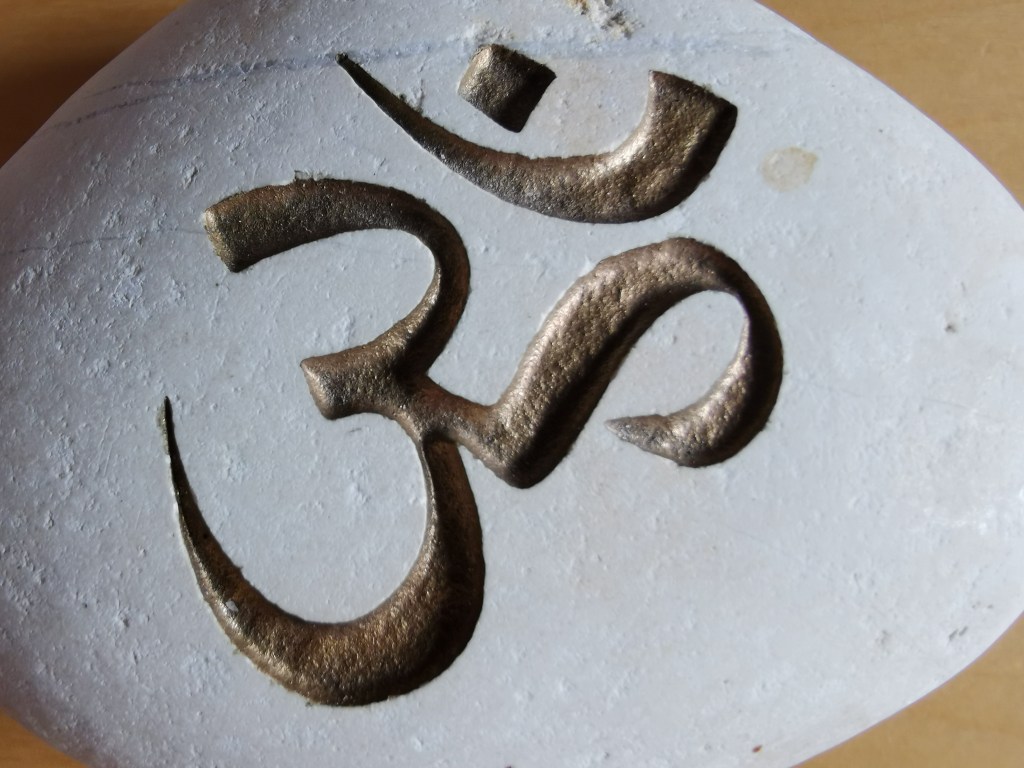
OṂ ity etad akṣaram idaṁ sarvam … bhūtam bhavad bhaviṣyad iti sarvam auṁkāra eva, yac cānyat trikālātītaṁ tad apy auṁkāra eva, Māṇḍūkya Upaniṣad. OṂ: this syllable is all this (the whole world) … the past, the present and the future … all that is only the syllable OṂ and anything beyond these three times that also is simply the syllable OṂ.
Commentary 7
‘eṣa sarveśvaraḥ, eṣa sarvajñaḥ, eṣo’ntāryami, eṣa yoniḥ sarvasya prabhavāpyayau hi bhūtānām’, Māṇḍūkya Upaniṣad. This is (prājña, an aspect of OṂ) the lord of all, he knows everything, he controls everything, he is the womb of all, he is the beginning and the end of (all) beings.
To utter the sacred syllable OṂ is to enter into contact with the Divine.
© Copyright 2021 Synesios
Français
Ennoia-Ré-flexion : Lógos, la sacralisation de la parole
Dans beaucoup de religions et de philosophies la parole (Lógos) a été sacralisée aussi bien en occident qu’en orient.
Dire, c’est donner naissance : Fiat.
Commentaire 1
Le Lógos (parole) est la médiation fondamentale de l’être matériel avec l’être spirituel.
Commentaire 2
‘ἐν ἀρχῇ ἦν ὁ λόγος, καὶ ὁ λόγος ἦν πρὸς τὸν θεόν, καὶ θεὸς ἦν ὁ λόγος’, Saint-Jean. Au commencement était le Lógos et le Lógos était avec Dieu et le Lógos était Dieu.
Commentaire 3
‘Dixitque Deus : Fiat lux et facta est lux’, Genèse. Et Dieu dit : que la lumière soit et la lumière fut.
Commentaire 4
Chez Héraclite le Lógos est la correspondance de la pensée humaine avec la réalité cosmique.
Chez Platon le Lógos est le divin en tant que source des Idées.
Chez les Stoïciens le Lógos est commun au monde et à l’homme, il est la Divinité suprême.
Commentaire 5
Allâh … ‘Quand il décide une chose, il lui suffit de dire : soit et cela est’, Coran.
Commentaire 6
OṂ ity etad akṣaram idaṁ sarvam … bhūtam bhavad bhaviṣyad iti sarvam auṁkāra eva, yac cānyat trikālātītaṁ tad apy auṁkāra eva, Māṇḍūkya Upaniṣad. OṂ, cette syllabe est tout cela (le monde entier) … le passé, le présent et le future … tout cela est seulement ‘la syllabe’ OṂ et n’importe quoi au-delà des trois (temps) cela aussi est seulement la syllabe OṂ.
Commentaire 7
‘eṣa sarveśvaraḥ, eṣa sarvajñaḥ, eṣo’ntāryami, eṣa yoniḥ sarvasya prabhavāpyayau hi bhūtānām’, Māṇḍūkya Upaniṣad. Celui-ci (prājña, un des deux aspects de OṂ)est le seigneur de tout, il connaît tout, il contrôle tout, il est la matrice de tout, il est le commencement et la fin de (tous) les êtres.
Prononcer la syllabe sacrée OṂ c’est entrer en contact avec le Divin.
© Copyright 2021 Synesios
 Fundamental Philosophy / Philosophie Fondamentale